


Making decisions about senior care can feel overwhelming, especially in a city as diverse and dynamic as Atlanta. You might be an adult child trying to support a parent, or perhaps you’re exploring options for your own future. The flood of unfamiliar terms, the worry about costs, and the emotional weight of a potential move can be paralyzing. You’re not just looking for a building; you’re looking for a community, for safety, and for peace of mind. You fear making a costly mistake that could impact your family’s legacy and well-being.
This is more than just a real estate transaction—it’s a deeply personal journey. This guide is designed to be your compassionate, comprehensive roadmap. We will walk you through the different levels of senior living in Atlanta, clarify the costs, and introduce you to vital community resources. Our goal is to replace confusion with confidence, empowering you to make the best choice for your family’s unique needs.
Table of Contents
The “Aging in Place” Alternative: Home Help vs. Senior Living
How to Evaluate Atlanta Senior Communities: A Family Checklist
Understanding the Atlanta Senior Living Landscape
The term “senior living” covers a wide spectrum of housing and care models designed to support older adults. It’s not a one-size-fits-all solution but a range of options that adapt to changing needs. In the Atlanta metro area, the market in 2026 is rapidly evolving, driven by a growing senior population and a greater demand for quality, person-centered care. Understanding this landscape is the first step toward navigating it successfully.
Local context is everything. A facility in the historic, quiet neighborhoods of Buckhead will offer a different experience than one in the more suburban environment of Stone Mountain. Proximity to world-class medical centers like Emory Healthcare or Grady Memorial Hospital can be a critical factor for those with specific health concerns. Resources like the Atlanta Area Agency on Aging provide invaluable baseline data and support, but a truly informed decision requires a deeper look at the character and resources of individual communities.
Why Atlanta Families are Looking for Better Options
Like many major cities, Atlanta is experiencing a “Silver Tsunami”—a significant increase in its senior population. This has led to higher demand for senior housing, making it more important than ever for families to plan ahead. For many, the decision is tied to the emotional weight of moving from a long-term family home, a place filled with decades of memories. The transition is not just logistical; it’s deeply personal. In response, the best senior care providers in Georgia are moving away from institutional models and toward “person-centered” care, an approach that honors the individual’s dignity, preferences, and history.
Key Terminology: Deciphering the Acronyms
The language of senior care can feel like a foreign language. Here are a few key terms to help you understand the conversation:
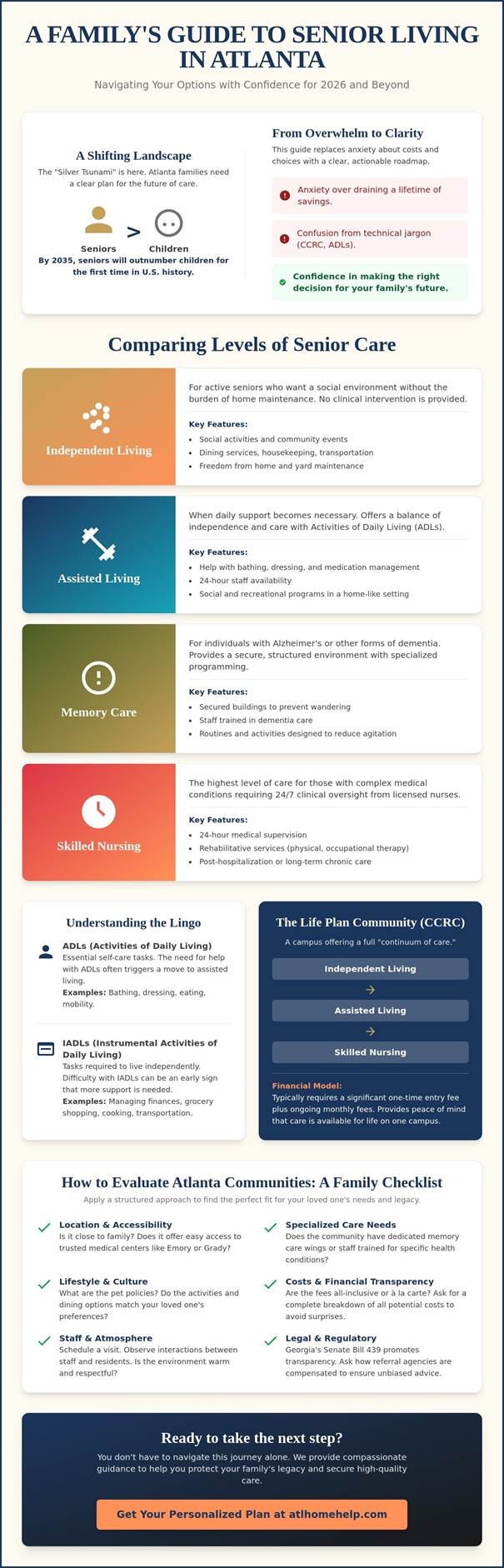
ADLs and IADLs: ADLs, or Activities of Daily Living, are fundamental self-care tasks like bathing, dressing, eating, and mobility. IADLs, or Instrumental Activities of Daily Living, are more complex tasks needed for independent living, such as managing finances, cooking meals, and transportation. A person’s ability to perform these helps determine the level of care they need.
Residential Care vs. Skilled Nursing: “Residential Care” typically refers to non-medical support with daily activities, like that found in assisted living. “Skilled Nursing” involves licensed medical professionals providing 24/7 care, often for post-surgery rehabilitation or complex, chronic conditions.
Life Plan Community (CCRC): A Life Plan Community, also known as a CCRC (Continuing Care Retirement Community), is a single campus offering a tiered model of care, from independent living to skilled nursing, allowing residents to age in place as their needs change.
Comparing Levels of Care: From Independence to Support
Choosing the right level of care is the most critical part of this process. It requires an honest assessment of current and potential future needs. This section of our Atlanta senior living guide breaks down the primary models you will encounter.
Independent Living: This is for active, healthy seniors who want to shed the burdens of home maintenance. These communities offer private apartments, cottages, or homes with amenities like dining services, social activities, and transportation, but do not include personal care.
Assisted Living: This model strikes a balance between independence and support. Residents live in their own apartments but receive help with ADLs like medication management, bathing, and dressing. It’s ideal for those who need some daily assistance but not intensive medical care.
Personal Care Homes: A Georgia-specific model, Personal Care Homes are often smaller, more intimate settings that provide many of the same services as assisted living. They are a frequently overlooked option that can offer a more home-like atmosphere.
Memory Care: These are specialized, secure environments designed for individuals with Alzheimer’s or other forms of dementia. Staff are specially trained, and the layout, activities, and security measures are all tailored to meet the unique needs of residents with cognitive decline.
Nursing Homes (Skilled Nursing Facilities): For individuals with complex medical conditions requiring 24/7 monitoring and care from licensed nurses. These facilities offer the highest level of medical support outside of a hospital.
The Life Plan Community (CCRC) Advantage
A Life Plan Community, or CCRC, offers a compelling promise: a home for life. The “continuum of care” concept means that as a resident’s health needs change, they can transition from independent living to assisted living or skilled nursing without having to leave the campus and community they’ve come to know. In Atlanta, most CCRCs require a significant upfront entry fee, which may be partially refundable, in addition to monthly service fees. This contrasts with rental models common in standalone assisted living communities. Committing to a single campus is a major decision, offering long-term stability but requiring significant financial planning.
Personal Care Homes vs. Assisted Living in Georgia
One of the most common points of confusion for Atlanta families is the difference between a Personal Care Home and an Assisted Living Community. While both provide housing and assistance with daily tasks, they are regulated differently by the Georgia Department of Community Health and offer distinct experiences.
Size and Atmosphere: Personal Care Homes are typically smaller, often located in residential houses that have been converted to care for a handful of residents. This can create a much more intimate, family-like environment. Assisted Living communities are generally larger, purpose-built facilities that feel more like apartment complexes with extensive amenities.
Staffing and Services: While both provide personal support, assisted living communities may offer a wider range of on-site services, such as a dedicated wellness director or diverse dining venues. Staffing ratios can vary widely, and it’s essential to ask about them in both types of communities. For some seniors, the smaller scale of a Personal Care Home allows for more personalized attention from a consistent group of caregivers.
The “Aging in Place” Alternative: Home Help vs. Senior Living
The vast majority of seniors express a strong desire to remain in their own homes for as long as possible. This is a valid and understandable goal, and for many, it is achievable with the right support system. The decision to “age in place” is not about avoiding change, but about proactively creating a safe and supportive environment within a familiar setting.
However, it’s also crucial to identify the “tipping point”—the moment when the home is no longer the safest or most supportive option. This could be due to a sudden health crisis, increasing isolation, or the inability to manage home maintenance. Simple home modifications like grab bars, improved lighting, and wheelchair ramps can extend independence significantly. Leveraging community and faith-based support networks for companionship and practical help is equally vital.
Evaluating Your Current Atlanta Property
For those choosing to age in place, the physical condition of the home is paramount to safety and well-being. An aging property can present hidden stressors that go beyond simple upkeep. In Atlanta, unresolved issues like city code violations or property liens can create immense financial and emotional strain on seniors. A cluttered, poorly maintained home can increase the risk of falls and create a sense of being overwhelmed. There is a direct connection between a healthy, well-maintained home and a senior’s ability to thrive independently.
Building a “Village” of Support at Home
No one can age in place alone. It requires building a “village” of formal and informal support. This can include:
Utilizing practical services like meal delivery programs and specialized senior transportation available across the Atlanta metro area.
Fostering social connection through local senior centers, faith communities, or volunteer programs to prevent the profound health risks of isolation.
Working with an advisory service that understands these challenges. At ATL Home Help Solutions, we provide compassionate guidance for families exploring their options, helping them find the resources needed to make staying at home a safe and viable choice.
How to Evaluate Atlanta Senior Communities: A Family Checklist
Once you’ve decided to explore senior communities, the next step is to evaluate your options systematically. Online reviews are a starting point, but they don’t tell the whole story. A thoughtful, in-person evaluation is essential. This step-by-step framework can help you move forward with clarity.
Step 1: Define Your “Must-Haves” vs. “Nice-to-Haves”. Create a list of non-negotiable requirements. This could include the level of care needed, budget, location (e.g., close to family in a specific neighborhood), pet policy, or the availability of religious services.
Step 2: Narrow Down 3-5 Options. Based on your must-haves, research and identify a shortlist of communities. Use online resources, but also seek recommendations from friends, doctors, or faith leaders.
Step 3: Schedule Tours at Different Times of Day. A community can feel very different at 10 AM on a Tuesday versus 5 PM on a Friday. Try to visit during a mealtime to observe the food quality and social atmosphere in the dining room.
Step 4: Ask the “Hard Questions”. Don’t be shy. Ask about staff-to-resident ratios, staff turnover rates, and how they handle medical emergencies. Request to see their most recent state inspection report.
Step 5: Review the Contract with an Advocate. Before signing anything, have the residency agreement reviewed by a trusted advisor or an elder law attorney. This is a significant financial and legal commitment, and you need to understand every detail.
What to Look for During an On-Site Visit
When you tour a facility, use all your senses to gauge the environment.
The “Smell Test”: The community should smell clean and fresh. Lingering unpleasant odors can be an indicator of cleanliness or continence care issues.
Observe Resident-Staff Interactions: Do caregivers make eye contact with residents? Do they speak with respect and warmth? Look for signs of genuine compassion, not just task-oriented efficiency.
Check for Safety Features: Notice the details. Are hallways well-lit? Are there grab bars in the bathrooms? Are emergency call systems easily accessible in both bedrooms and bathrooms?
Financial Planning and Atlanta Resources
Navigating the cost of care is often the biggest hurdle. While Medicare does not typically cover long-term residential care, other resources may be available.
Georgia Medicaid Waivers: For eligible low-income seniors, Georgia offers Medicaid waiver programs that can help cover the costs of services in an assisted living or personal care home.
Veteran Benefits: The VA’s Aid and Attendance benefit can provide a significant monthly pension to eligible veterans and surviving spouses to help pay for long-term care.
Senior Housing Consultation: The financial landscape is complex. A consultation with a knowledgeable and ethical advisor can help you understand all your options and avoid devastating financial mistakes.
Compassionate Guidance for Your Next Chapter
Navigating the world of senior living is a journey you don’t have to take alone. The process is filled with complex choices and deep emotions. Having a knowledgeable advocate in your corner can make all the difference, transforming a stressful process into an empowering one.
At ATL Home Help Solutions, we serve as a faith-based, community-focused resource for Atlanta families. We believe in bridging the gap between crisis and clarity, offering practical solutions and empathetic support. Our mission is to help you find the right path forward, whether that leads to a new community or involves finding the resources to thrive at home.
The ATL Home Help Solutions Difference
Our mission is rooted in our commitment to serving the Atlanta community. We are not a large, impersonal directory; we are a local resource dedicated to helping families navigate complex housing challenges with dignity and respect. We focus on practical, real-world solutions that protect a senior’s legacy while ensuring they receive the care they deserve. Our unique expertise in addressing property-related issues provides an extra layer of support that many families find invaluable.
Take the First Step Today
The best time to start this conversation is before a medical crisis forces a hasty decision. Beginning the research process early allows you to explore options thoughtfully and make choices based on foresight, not fear. We encourage you to open the dialogue with your loved ones and begin gathering information now.
To support you on this journey, we invite you to access our Free Monthly Homeowner Guide, which offers practical tips for seniors in Atlanta. When you are ready for personalized guidance, we are here to help.
Schedule your senior housing consultation with ATL Home Help today.
Frequently Asked Questions (FAQs)
What is the average cost of assisted living in Atlanta in 2026?
While figures vary, the average monthly cost for assisted living in the Atlanta area is approximately $3,800 to $4,200. However, this can change significantly based on the community’s location, amenities, and the level of care required.
Does Medicare pay for senior living communities in Georgia?
No, Medicare does not pay for the room and board costs of long-term care in assisted living, personal care homes, or independent living. It may cover short-term, medically necessary care in a skilled nursing facility after a qualifying hospital stay.
What is the difference between a Personal Care Home and Assisted Living?
In Georgia, the main differences are size and regulation. Personal Care Homes are typically smaller, often in converted residential homes, offering a more intimate setting. Assisted Living communities are usually larger, purpose-built facilities with more extensive amenities. Both provide help with daily activities, but they are licensed under different state regulations.
How do I know if my elderly parent needs to move or can stay at home?
Look for key signs, such as recent falls, difficulty managing medications, noticeable weight loss, poor hygiene, or increasing social isolation. An honest conversation about their safety and well-being, possibly with the help of their doctor or a geriatric care manager, can help determine the best path forward.
Are there faith-based senior housing resources in Atlanta?
Yes, many senior living communities in Atlanta have faith-based affiliations, offering on-site chapels, religious services, and spiritual support. Additionally, organizations like ours, ATL Home Help Solutions, operate from a faith-based mission to provide compassionate, ethical guidance to families.
What should I do if my parent’s home has code violations or liens?
Addressing property issues like code violations or liens is a critical first step, as they can create significant financial and legal stress. Contacting a resource that specializes in these specific challenges can provide a clear plan to resolve the issues, protecting your parent’s assets and peace of mind.
How can I find affordable senior housing in the Atlanta metro area?
Finding affordable options requires research and exploring all available financial aid. Look into resources like the Atlanta Area Agency on Aging, investigate eligibility for Georgia’s Medicaid waiver programs, and see if Veteran benefits like Aid and Attendance apply. A senior housing advisor can also help identify more budget-friendly communities.
What questions should I ask during a senior living facility tour?
Key questions include: What is your staff-to-resident ratio during the day and overnight? What is your staff turnover rate? How do you create personalized care plans? What are the specific costs included in the monthly fee, and what costs extra? Can I see your most recent state inspection report?