


For many long-term residents in neighborhoods like West End or Cascade, the family home is more than just real estate. It’s a legacy that feels increasingly under threat as property taxes rise and city codes change. It’s exhausting to worry about potential liens or displacement when you simply want to age in place with dignity.
We understand that the search for community housing resources Atlanta seniors can trust often feels like navigating a maze of waitlists and red tape. You deserve a clear path to stability. This guide is designed to help you and your family discover the nonprofit, government, and faith-based resources available right now to protect your home and your peace of mind.
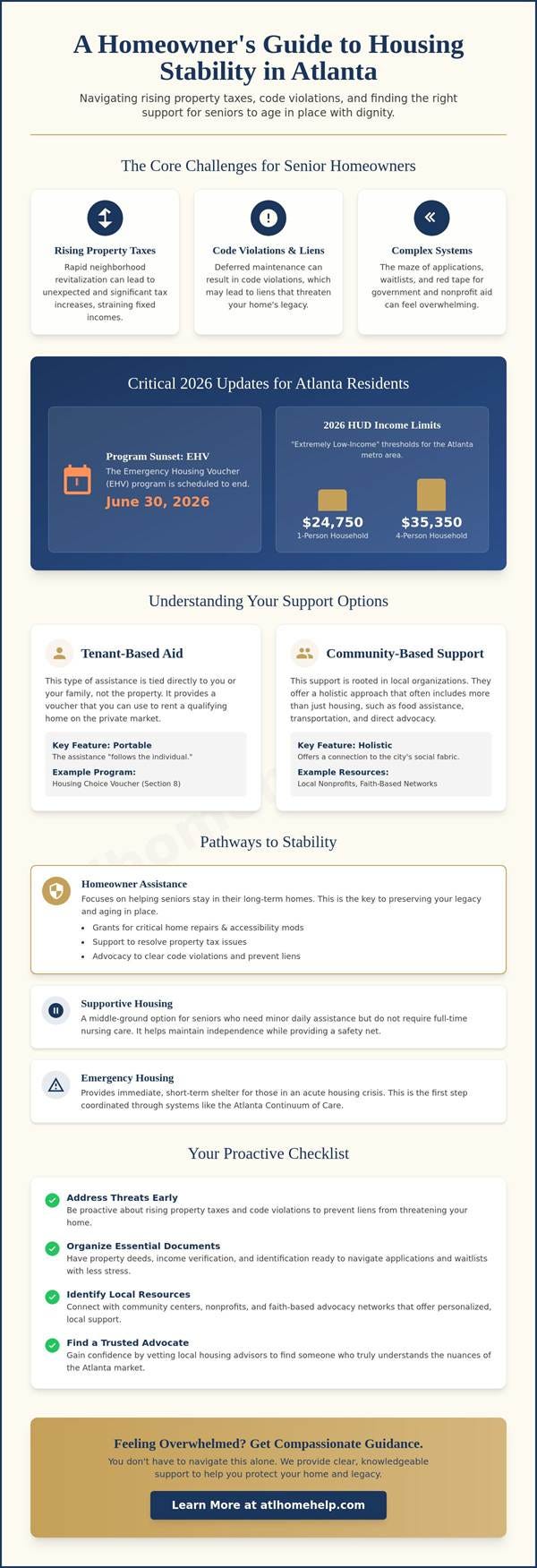
We’ll walk through the updated 2026 HUD income limits for the Atlanta metro area and explain how to find local advocates who truly understand our market. You’ll also learn about critical deadlines, including the sunset of the Emergency Housing Voucher program on June 30, 2026, so you can take action with confidence and clarity.
Key Takeaways
Understand the critical differences between tenant-based aid and community-based support to secure the most reliable housing option for your situation.
Identify the essential community housing resources Atlanta seniors can utilize through local nonprofit and faith-based advocacy networks.
Learn how to address rising property taxes and code violations early to prevent liens from threatening your family’s home and legacy.
Organize your essential documents, including property deeds and income verification, to navigate waitlists and applications with less stress.
Gain the confidence to vet local housing advisors and find a knowledgeable advocate who understands the nuances of the Atlanta market.
Table of Contents
Understanding the Senior Housing Landscape in Atlanta
Atlanta’s housing market is moving quickly. For many long-term residents, this shift isn’t just about rising property values; it’s about whether they can afford to stay in the neighborhoods they’ve shaped for decades. Finding reliable community housing resources Atlanta seniors can access requires looking beyond just “low-income apartments.” True community resources include legal advocacy, home repair grants, and neighborhood-based support systems that help residents maintain their independence.
It’s vital to understand the difference between tenant-based and community-based assistance. Tenant-based aid, like the Housing Choice Voucher program administered by Atlanta Housing, follows the individual. In contrast, community-based assistance is often tied to specific local organizations or faith-based groups that provide holistic support. These groups don’t just offer a place to live; they offer a connection to the city’s social fabric. Many families are now prioritizing What is Aging in Place?, which focuses on providing the necessary support for seniors to live in their own homes safely and independently as they grow older.
The year 2026 brings specific challenges and deadlines. The Emergency Housing Voucher (EHV) program is set to sunset on June 30, 2026. This deadline creates a sense of urgency for families currently relying on these specific federal subsidies. Additionally, eligibility for many local programs now hinges on the updated 2026 HUD income limits. In the Atlanta metro area, a one-person household is considered extremely low-income at $24,750, while the limit for a four-person household is $35,350. Knowing these numbers is the first step in determining which local programs are actually within reach.
Types of Senior Housing Support in Atlanta
Support in our city generally falls into three categories. Emergency housing provides immediate shelter for those in crisis, often through the Atlanta Continuum of Care. Supportive housing offers a middle ground for seniors who need minor daily assistance but don’t require full-time nursing care. Finally, homeowner assistance focuses on seniors staying in their long-term residences. This includes programs that help resolve code violations or address unpaid property taxes before they lead to liens.
The Importance of Localized Atlanta Resources
City-specific programs often provide faster relief than state-wide initiatives because they understand the unique pressures of Atlanta’s neighborhoods. Neighborhood revitalization in areas like the Westside or South Atlanta can lead to rapid tax increases, making localized advocacy essential. Working with organizations that know the specific Atlanta City Council districts ensures that you are accessing the exact grants and protections designated for your specific street and block.
Key Community and Nonprofit Resources for Seniors
Local support often starts with a neighborly hand rather than a government form. While the Atlanta Continuum of Care (CoC) provides a structured system for crisis intervention, many families find that nonprofit community housing resources Atlanta seniors rely on offer a more personal touch. These organizations bridge the gap between large-scale federal programs and the immediate, daily needs of our elders. Community centers across the city often serve as the first point of contact, providing a gateway to information about local grants and neighborhood initiatives.
Maintaining a home is a major challenge for many. Nonprofits in the metro area focus specifically on senior home repair and accessibility modifications. Whether it’s installing a wheelchair ramp or fixing a leaking roof, these services prevent code violations that could lead to displacement. Keeping a home safe and up to code is a practical way to protect a family’s legacy. If you’re feeling overwhelmed by the maintenance your property requires, our Free Monthly Homeowner Guide offers clear steps to manage these challenges effectively.
Faith-Based Senior Support Networks
Atlanta’s rich history of faith-based activism continues to play a vital role in senior care. Local churches and religious organizations often fill the gaps where government aid falls short. These ministries provide more than just spiritual support; they are active hubs for food assistance, transportation to medical appointments, and direct housing referrals. In these settings, you’ll often find a knowledgeable advocate who knows the specific needs of the congregation and the surrounding blocks. This neighborly approach de-escalates the anxiety of searching for help because it’s rooted in existing community trust.
Non-Governmental Housing Referral Services
Sometimes a generic internet search creates more confusion than clarity. Private senior housing referral and advisory services offer a significant advantage by providing personalized guidance. Instead of looking at a static list of buildings, these advisors help you evaluate options based on your specific health needs and financial situation. While you can certainly research Atlanta Housing Senior Communities on your own, a local advocate can provide context that a website cannot. They understand which neighborhoods are seeing property shifts and which facilities have the best reputation for compassionate care. This tailored approach ensures that the transition to a new living environment is handled with the dignity your loved ones deserve.
Protecting the Home: Addressing Liens and Code Violations
Homeownership is the primary way families build wealth in our city. For many, a house in Southwest Atlanta or Kirkwood is their most valuable asset. However, maintaining that asset becomes harder as we age. City agencies use code enforcement to ensure safety, but these notices often feel like a personal attack. Understanding the community housing resources Atlanta seniors have at their disposal is essential for keeping your property in your hands. You don’t have to face the city’s bureaucracy alone.
There’s a direct connection between property maintenance and financial security. When a senior can’t afford a roof repair, the city may issue a citation. If that citation goes ignored, it turns into a fine. Unpaid fines eventually become liens. This cycle is a significant part of the broader discussion regarding Housing Equity for Seniors. Protecting your equity means interrupting this cycle before it leads to a tax sale or foreclosure. It’s about preserving your legacy for the next generation.
Minor repairs can escalate into major legal liens if left unaddressed. A small leak leads to water damage, which leads to a structural citation. Once a lien is placed on the property, it collects interest and complicates your title. Empowering yourself to respond to City of Atlanta notices immediately is the best defense. Most inspectors are willing to work with residents who show they’re trying to find a solution. Taking that first step of communication can stop fines from accumulating and give you time to find assistance.
Navigating Atlanta Code Enforcement
Common violations include overgrown grass, peeling exterior paint, or broken windows. These issues often target elderly-owned properties where physical upkeep has become difficult. When you see a notice taped to your door, don’t panic. The first step is to contact the inspector listed on the document. Communication shows you’re acting in good faith. A code violation is a manageable hurdle, not an immediate eviction.
Stopping Liens and Protecting Home Equity
A lien is a legal claim against your property for a debt. In Atlanta, these often stem from unpaid property taxes or municipal fines. If left unaddressed, a lien can prevent you from passing the home to your children or selling it on your own terms. Fortunately, there are ways to resolve these debts. Local advocacy groups can help you apply for tax exemptions or find grants for emergency repairs. Tracking the health of your property is a monthly task. Our Free Monthly Homeowner Guide provides a checklist to help you spot potential issues before the city does. Staying proactive is the best way to ensure your family home remains a source of stability rather than a source of stress.
How to Access and Evaluate Housing Support Services
Taking the first step toward finding a new living situation or protecting your current home is often the hardest part. The process involves more than just filling out paperwork; it requires a strategic approach to ensure you’re accessing the most reliable community housing resources Atlanta seniors have available. Start by gathering your essential documents early. You’ll need a valid government-issued ID, recent income verification, and your property deed if you’re a homeowner. Having these ready prevents delays when a spot opens up in a preferred program.
When you look for professional guidance, you must vet your advisor carefully. Ask them specific questions about their experience with Atlanta City Council districts and local neighborhood associations. If an advisor can’t explain the difference between the Westside and South Atlanta housing climates, they might not have the local nuance you need. Be wary of advertisements that promise “guaranteed” placement or use high-pressure sales tactics. Real assistance is methodical and transparent, not rushed or secretive.
Understanding the timeline is crucial for managing expectations. With the average occupancy rate for stabilized multifamily properties in Atlanta at 93.3% as of February 2026, competition for available units is high. Application to placement can take several months, depending on the specific program. Knowing this helps you plan ahead and avoids the panic of a last-minute move. To stay ahead of these market shifts and keep your property in good standing, you can download our Free Monthly Homeowner Guide for ongoing support.
Step-by-Step Intake Process
The journey begins with an honest needs assessment. Does the senior require daily medical help, or simply a more affordable neighborhood? Once you identify the goal, decide whether to contact a local referral agency or apply directly to the Atlanta Housing Authority. A consultation with a housing specialist can help you weigh these options. They’ll help you prepare for the specific requirements of Atlanta-based programs, ensuring your application is as strong as possible from day one.
Involving the Family in the Transition
Adult children often carry the weight of navigating these resources for their parents. It’s a role that requires patience and a clear head. To manage the emotional stress, focus on creating a “housing safety net” by connecting with local community leaders and neighbors. Open communication with your parent is vital; they should feel empowered throughout the transition. By working together, you can turn a high-stress situation into a manageable plan that protects both the senior’s well-being and the family’s long-term interests.
Compassionate Guidance with ATL Home Help Solutions
Finding the right path forward shouldn’t feel like a solo journey. At ATL Home Help Solutions, we’ve dedicated ourselves to being a steady, reliable presence for families navigating the complex landscape of community housing resources Atlanta seniors need. We serve as a faith-based resource, which means our work is rooted in the belief that every resident deserves to age with dignity in a safe, stable environment. We aren’t a distant corporate agency; we’re your neighbors, and we understand the specific pressures of the Atlanta market.
Our Senior Housing Consultation and Referral service is designed to take the weight off your shoulders. We know that the search for a new home or the struggle to keep an old one is deeply personal and often overwhelming. By providing a clear, methodical approach, we help you evaluate your options without the pressure of a sales pitch. We focus on your specific goals, whether that’s finding a specialized community that fits the 2026 HUD income limits or resolving property issues that threaten your peace of mind. We act as a knowledgeable advocate in your corner, ensuring you have the information needed to make the best choice for your family.
Preserving your home is about more than just four walls; it’s about the memories and the equity you’ve built over a lifetime. We specialize in helping families understand how to navigate property preservation and lien challenges. While we don’t provide legal representation or financial lending, we do offer the guidance needed to understand what the City of Atlanta is asking of you. We help you translate technical notices into plain English so you can take the right steps to protect your home. This focus on long-term stability is what makes us a reliable local resource for those who feel targeted by aggressive code enforcement or rising taxes.
Our Faith-Based Approach to Housing
We treat every person who reaches out to us like a neighbor, not a case number. This perspective changes how we provide support, moving away from clinical intake forms and toward genuine conversation. Our team combines practical real estate knowledge with a compassionate heart to help you solve difficult problems. Our referral service acts as a bridge between overwhelmed families and stable housing, providing clarity when the options feel too complex to navigate. We believe that by offering this guidance freely, we empower our community to make informed decisions that protect their legacy.
Join the ATL Home Help Community
Protecting a family legacy often starts with small, proactive steps. One of the most effective tools we offer is our Free Monthly Homeowner Guide. This resource is tailored specifically for Atlanta seniors and their families, providing updates on local property shifts and maintenance tips that prevent code violations. By staying informed, you can avoid the high-stress situations that lead to liens or displacement. Our advisory services are here to de-escalate those moments of panic and replace them with a methodical plan of action. You don’t have to wait for a crisis to get help. We invite you to Schedule your senior housing consultation today and take the first step toward a more secure tomorrow.
Securing Your Family’s Legacy in Atlanta
Protecting your home is about more than maintaining a building; it’s about ensuring your family has a stable foundation for years to come. We’ve explored how understanding the 2026 HUD income limits and responding quickly to city code notices can prevent small issues from becoming legal liens. Accessing the right community housing resources Atlanta seniors deserve requires a proactive approach and a clear understanding of the local market’s unique pressures. Staying informed is your best defense against displacement.
As a neighbor-led, faith-based resource, we’re dedicated to helping you navigate these challenges with clarity and compassion. Our team specializes in property preservation and lien resolution, offering the steady guidance you need to stay in the neighborhood you love. You don’t have to manage these complex systems on your own. To stay updated on local property shifts and receive practical advice every month, please Download our Free Monthly Homeowner Guide to protect your Atlanta property. We’re in your corner, and we’re ready to help you move forward with confidence.
Frequently Asked Questions
What is the best way for an Atlanta senior to find affordable housing in 2026?
The most effective starting point is checking the 2026 HUD income limits and contacting reputable local housing assistance organizations, such as ATL Home Help Solutions, or other local housing help centers. These local entities provide centralized information on current availability across the metro area. It’s also wise to research community housing resources Atlanta seniors can access through neighborhood-based nonprofits, as these localized groups often have shorter waitlists than the larger city-wide programs.
Are there free home repair programs for seniors in Atlanta?
Yes, several nonprofit organizations and city initiatives offer home repair assistance to help elders age in place safely. Groups like the Westside Future Fund or other community-focused organizations often provide grants for critical repairs like roofing or accessibility ramps. You should also check with your specific City Council district office to see if there are localized neighborhood revitalization funds currently available for senior homeowners.
How do I respond to a City of Atlanta code violation notice?
Contact the inspector listed on the notice immediately to show you’re acting in good faith and intend to resolve the issue. Most city inspectors are willing to extend deadlines if they see you’re making an effort to solve the problem. Explain your situation clearly and ask for a list of specific steps needed to bring the property into compliance. This open communication prevents fines from escalating into legal liens.
Can a property lien lead to a senior losing their home?
An unresolved lien can eventually result in a tax sale or foreclosure if the debt remains unpaid for an extended period. Liens often stem from unpaid property taxes or municipal fines related to unaddressed code violations. It’s vital to address these claims early by seeking property tax exemptions or working with a local advocate to find a resolution that protects your home equity and your family’s legacy.
What faith-based organizations in Atlanta help with senior housing?
Many local churches and ministries provide neighborly support, including housing referrals, transportation assistance, and emergency financial aid. Organizations like the Saint Vincent de Paul Society or specific neighborhood ministries often fill the gaps left by government programs. These faith-based groups are excellent community housing resources Atlanta seniors can turn to for compassionate, localized assistance when they feel overwhelmed by complex bureaucratic systems.
How long is the waitlist for senior housing in Atlanta?
Waitlists vary significantly depending on the facility and the program, but they often range from several months to a few years. With senior housing occupancy rates in the metro area reaching over 90% in early 2026, demand remains very high. It’s important to apply to multiple communities simultaneously and check in regularly with housing managers to ensure your application remains active and your contact information is current.
What should I bring to a senior housing consultation?
You should bring a valid government ID, your most recent income verification documents, and a copy of your property deed if you’re a homeowner. It’s also helpful to have a list of your specific health needs and any current code violation notices you’ve received. Having this information organized allows your advisor to give you the most accurate guidance and speeds up the application or referral process significantly.
Is there help for seniors struggling with Atlanta property taxes?
Atlanta offers several tax exemptions for seniors, including the basic homestead exemption and additional age-based or income-based deferrals. You should visit the Fulton County or DeKalb County Tax Commissioner’s office to apply for these specific protections. Taking advantage of these exemptions is a critical step in lowering your annual costs and preventing the financial strain that often leads to dangerous property liens.