


Deciding to downsize is more than just a move; it’s a significant life transition. For Atlanta seniors and their families, this process can feel overwhelming, tangled with a lifetime of memories, belongings, and complex property issues. You may be asking, “Where can I find a trusted local resource to help me downsize without being pressured into a sale?” You need a compassionate, step-by-step roadmap designed to protect your legacy and peace of mind. This guide is designed to provide just that.
Navigating the complexities of downsizing in Atlanta requires more than a checklist; it demands local knowledge and a supportive advocate who understands your unique challenges. From sorting through cherished possessions to resolving unexpected property liens or code violations, having a clear plan is the first step toward a peaceful and secure future.
Table of Contents
The Anatomy of a Senior Downsizing Consultation: What to Expect
Your Comprehensive Homeowner Resource Guide for Atlanta Seniors
Partnering with ATL Home Help: Compassionate Guidance for Your Transition
Why Senior Downsizing in Atlanta Requires a Local Strategy
downsizing in Atlanta isn’t the same as it is in other cities. It involves navigating a unique blend of emotional hurdles, a dynamic real estate market, and specific municipal regulations. Generic advice often fails to address the very real challenges that long-time Atlanta homeowners face. This is not simply about “clutter removal”; it’s about legacy protection and ensuring your next chapter starts on solid ground.
Leaving a home filled with decades of memories in a beloved Atlanta neighborhood is an emotional journey. The goal is to honor that history while creating a plan for a simpler, safer, and more manageable future. A local strategy acknowledges this emotional weight and combines it with practical advocacy to handle the city-specific issues that can complicate a move.
The Emotional Journey of Downsizing
One of the biggest hurdles in any downsizing effort is sentimental attachment. Every object can feel like a piece of your family’s history, making it difficult to let go. A compassionate approach reframes this process not as a loss, but as an opportunity to curate your most treasured memories and simplify your life for greater peace.
For families, starting the conversation about downsizing can be delicate. It’s essential to approach it with empathy and patience. Here’s some de-escalating advice:
Focus on the Future: Frame the discussion around future benefits, such as increased safety, less maintenance, and more freedom to enjoy retirement.
Listen First: Understand your parent’s fears and anxieties. Are they worried about losing independence, leaving neighbors, or the physical work involved? Acknowledging these concerns is the first step to finding solutions.
Start Small: Suggest tackling one small area, like a closet or a single room, to make the process feel less monumental. Success in a small task can build momentum and confidence.
Atlanta’s Unique Real Estate Landscape
Atlanta’s neighborhoods are constantly changing, and shifting property values and taxes can place a significant strain on seniors living on a fixed income. The concept of “aging in place” is wonderful, but it can become a source of stress if the home’s maintenance, taxes, and accessibility are no longer sustainable.
In some cases, the cost and labor required to maintain a large family home can be more stressful than the process of moving. This is where a neighborly, civic-minded resource can make all the difference. Unlike a traditional real estate agent focused solely on a transaction, a local advocate like ATL Home Help Solutions focuses on your well-being, providing guidance and connecting you with the resources you need to make an informed, unpressured decision.
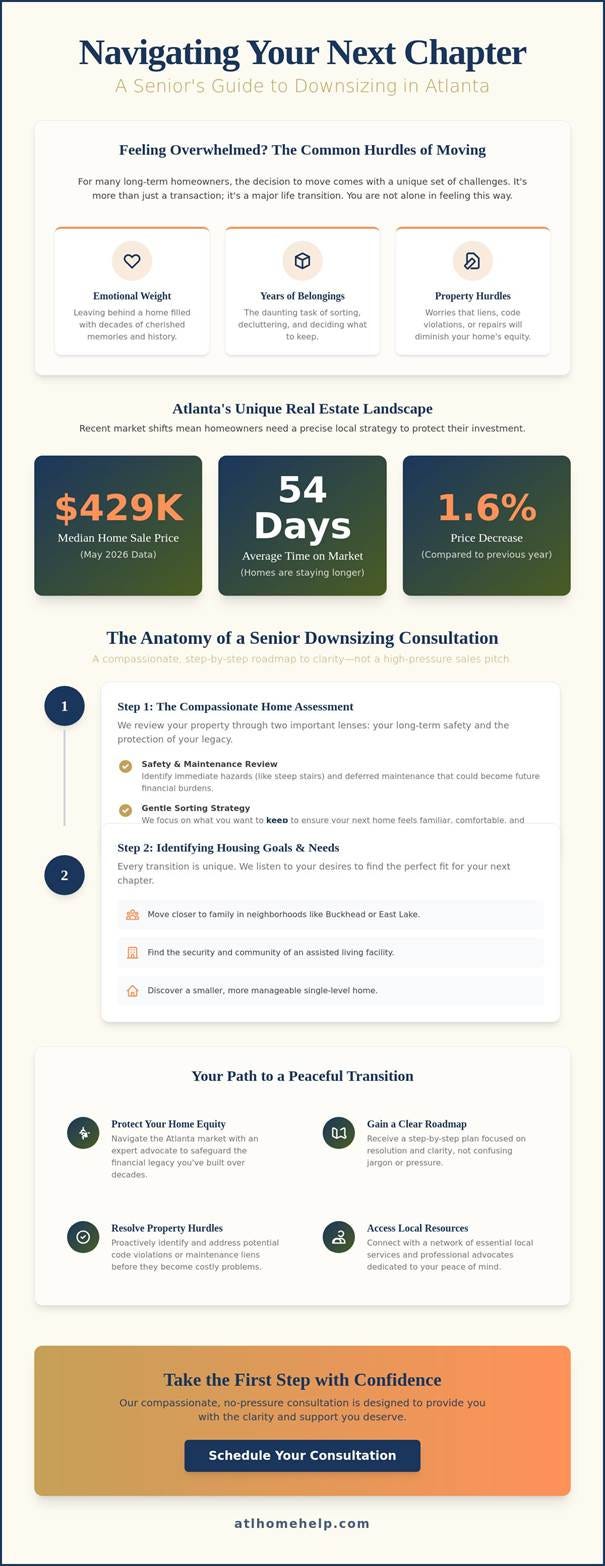
The Anatomy of a Senior Downsizing Consultation: What to Expect
A true senior downsizing consultation in Atlanta should be about achieving clarity, not pushing a sale. It’s a dedicated session designed to assess your situation, understand your goals, and provide a customized action plan. The primary objective is to empower you with information, so you can move forward with confidence. A professional and non-judgmental home assessment is a critical part of identifying hidden risks, such as deferred maintenance or potential code issues, before they become costly problems.
Step 1: The Compassionate Home Assessment
The process begins with a respectful walk-through of your home. A consultant is there to listen and observe, not to judge. The focus is on understanding your unique situation from your perspective. During this assessment, the consultant will:
Identify Safety Hazards: Look for potential risks like poor lighting, tripping hazards, or accessibility issues that could impact your well-being.
Assess Repair Needs: Note any deferred maintenance, from a leaky faucet to more significant structural concerns, that could affect your home’s value or safety.
Develop a Sorting Strategy: Discuss a practical, room-by-room approach for sorting through decades of belongings, helping you decide what to keep, gift to family, donate, or discard.
Step 2: Identifying Housing Goals and Needs
Once the current situation is understood, the conversation turns to the future. Where do you see yourself living next? A consultation helps you explore all the options without bias. This includes discussing:
Future Living Arrangements: Exploring the pros and cons of moving to a smaller home, an independent living community, or an assisted living facility.
Budget and Location: Factoring in your financial situation and desired location to narrow down realistic and appealing options.
Personal Priorities: Understanding what matters most to you—being close to family, having access to specific amenities, or staying within a familiar community.
This step is about aligning your housing with your lifestyle goals. For a deeper look into this part of the process, it’s helpful to understand what to expect in a dedicated senior housing consultation.
Step 3: Creating the Roadmap
The final step is the delivery of a customized transition plan. This isn’t a generic checklist; it’s a detailed roadmap tailored to your specific circumstances. This plan addresses both the “stuff” (your belongings) and the “structure” (the physical house and any associated issues). It outlines clear, sequential steps for you and your family to follow, covering everything from decluttering timelines to referrals for trusted local services. The roadmap ensures everyone involved, including family members, is on the same page, reducing confusion and conflict.
Your Comprehensive Homeowner Resource Guide for Atlanta Seniors
To help you succeed, it’s crucial to have a network of reliable local resources at your fingertips. This guide serves as a template for organizing the contacts and information you need to protect yourself from predatory practices and make empowered decisions. Think of it as your personal directory for navigating housing, health, and financial matters in Atlanta. By having this information ready, you can act proactively instead of reacting in a crisis.
Essential Atlanta Senior Housing Resources
Navigating the housing landscape requires knowing who to call. Keep a folder—digital or physical—with contact information for the following types of organizations:
Local Housing Authorities: Agencies that can provide information on affordable housing options and senior-specific programs.
Senior-Focused Nonprofits: Organizations dedicated to elder care, offering services that range from meal delivery to home modification assistance.
Property Document Tracker: Create a simple sheet to track important documents like your property deed, tax records, and utility information. Knowing where these are is critical.
Connecting with dedicated Atlanta senior housing support services can provide an extra layer of advocacy and guidance throughout your journey.
Financial and Legal Advocacy Contacts
Protecting your home equity and financial health is paramount. Your resource guide should include contacts for:
County Tax Assessor’s Office: To inquire about property tax exemptions available to seniors in your specific county (Fulton, DeKalb, etc.).
Legal Aid Services: Organizations that provide low-cost or free legal advice on matters related to property titles, wills, and heirs’ property issues.
Faith-Based Community Resources: Local churches and faith-based groups in Atlanta are often a source of immense support, offering everything from volunteer help to referrals for trusted service providers.
Overcoming Challenges: From Code Violations to Home Repairs
For many senior homeowners, years of deferred maintenance can lead to unexpected and stressful challenges, particularly with city code enforcement. A “Code Enforcement” violation is a notice from the City of Atlanta that your property does not meet municipal standards for safety and upkeep. These issues, such as overgrown yards, peeling paint, or structural problems, can disproportionately affect seniors who may lack the physical or financial ability to perform repairs.
An unresolved violation can lead to fines and, eventually, a property lien—a legal claim against your home that must be paid before you can sell it. This can trap homeowners and erode their hard-earned equity. However, there is hope. A proactive approach can resolve these issues and clear the path for a successful downsizing transition, even for a “fixer-upper” property.
Navigating Atlanta Property Code Violation Help
Receiving a code violation notice can be alarming, but it is not an insurmountable problem. The key is to act quickly and strategically. The first step is to understand the notice and the deadline for compliance. From there, you can explore options to stop a code enforcement lien from being placed on your property. This often involves communicating with the city, documenting a plan for repairs, and seeking assistance from advocates who know the system. Don’t let the notice sit unanswered; seeking Atlanta property code violation help early is the most effective way to protect your home.
Finding Home Repair Assistance
The connection between housing quality and a senior’s mental and physical health is well-documented. Living in a state of disrepair can be a source of constant stress and anxiety. Prioritizing repairs is essential. A good starting point is to create a checklist:
Safety First: Address any issues that pose an immediate risk, like faulty wiring, broken steps, or plumbing leaks.
Curb Appeal and Value: Focus on repairs that improve the home’s value and compliance with city codes, such as exterior paint, roof repairs, and landscaping.
Minor Fixes: Tackle smaller projects that make the home more comfortable and presentable.
Several local programs and nonprofits in the Atlanta area offer grants or low-cost loans to help seniors with emergency and essential home repairs, ensuring their homes are safe and habitable.
Partnering with ATL Home Help: Compassionate Guidance for Your Transition
At the heart of ATL Home Help Solutions is a faith-based mission to serve Atlanta families with integrity and compassion. We are not real estate brokers focused on a commission; we are community advocates focused on your well-being. Our role is to act as a bridge, connecting you with the resources, information, and support you need to find better housing and peace of mind.
This “referral and advisory” model means our only goal is your best interest. We provide the clarity and guidance you need to navigate your options, whether that means resolving a code violation to stay in your home safely or finding the right senior community for your next chapter.
A Faith-Based Approach to Housing
A values-driven service model makes a tangible difference. It means every conversation is handled with patience, respect, and empathy, reducing the stress that families often feel during this time. Our neighbor-to-neighbor philosophy is built on trust and a genuine desire to help. We are part of a network of faith based senior resources in Atlanta that believe in supporting our community members with practical, heartfelt assistance. This approach ensures you feel heard, understood, and cared for every step of the way.
How to Get Started Today
Taking the first step is simple and pressure-free. You can begin by requesting a consultation to discuss your specific situation and concerns. This conversation is a risk-free way to gain clarity on your property and explore your options without any obligation.
For those who are just starting to gather information, our Free Monthly Homeowner Guide is an invaluable, low-pressure resource. It’s packed with practical tips and local insights to help you protect your home and your legacy.
A senior downsizing consultation with a trusted Atlanta advocate is the first step toward transforming an overwhelming challenge into a manageable, positive transition.
Get Your Free Monthly Homeowner Guide and Protect Your Legacy
Frequently Asked Questions (FAQs)
What is included in a senior downsizing consultation?
A consultation typically includes a comprehensive home assessment to identify repairs and safety issues, a discussion of personal housing goals, a strategy for sorting belongings, and the creation of a customized, step-by-step roadmap for the entire transition process.
How much do senior downsizing services cost in Atlanta?
Costs can vary depending on the provider and the scope of services. ATL Home Help Solutions focuses on providing advisory and referral services. An initial consultation is designed to provide clarity and a plan, with any further service costs clearly outlined beforehand. The goal is to provide value and direction, not to create a financial burden.
Can you help if my house has an Atlanta code violation lien?
Yes. A key part of our service is providing guidance on navigating complex property issues. We can help you understand the process for responding to the City of Atlanta, develop a plan to address the violations, and connect you with resources to help resolve the lien and protect your home equity.
Do I have to sell my home immediately after a consultation?
Absolutely not. A consultation is about empowerment and planning, not pressure. The goal is to provide you with a clear understanding of your options so you can make a decision on your own timeline. Sometimes, the right choice is to make modifications to safely age in place.
How do I know if it is time for my elderly parent to downsize?
Look for signs that home maintenance is becoming a physical or financial burden. Other indicators include social isolation, difficulty navigating stairs or other parts of the home, or a recent health event that makes living alone less safe. The best approach is an open, compassionate conversation about their needs and desires.
What makes a faith-based housing resource different?
A faith-based resource operates on a foundation of values like compassion, integrity, and service. The focus is on the person’s well-being rather than a transaction. This often results in a more patient, empathetic, and supportive experience for seniors and their families during a stressful time.
Are there free home repair resources for seniors in Atlanta?
Yes, several nonprofit organizations and city or county programs in the Atlanta area offer grants, volunteer labor, or low-interest loans to help eligible seniors with essential home repairs, particularly those related to safety and accessibility. A consultation can help connect you to these local resources.
How can I stop the City of Atlanta from placing a lien on my property?
The most effective way is to respond to a code violation notice promptly. This involves contacting the code enforcement officer, understanding the required corrections, and showing a good-faith effort to comply. If you need help, an advocate can guide you through the communication and resolution process to prevent a lien.