


For many long-time Atlanta residents, a family home is more than just a building; it’s a legacy. It’s the heart of family gatherings, a cornerstone of the neighborhood, and a testament to years of hard work. But in a city that’s changing rapidly, protecting that legacy can feel overwhelming. Rising property taxes, confusing city ordinances, and the physical demands of maintaining an older home can create a constant sense of anxiety.
You may find yourself worrying about a notice from code enforcement over a drooping fence or feeling unsure how to handle a sudden increase in your tax bill. These are not just minor inconveniences; they are serious challenges that can threaten the stability you’ve worked so hard to build. This is precisely why having a consistent, reliable source of local information is no longer a luxury—it’s a necessity.
This guide is designed to be your trusted resource, helping you move from a state of reactive worry to proactive confidence. We’ll break down the most pressing issues facing senior homeowners in Atlanta, from navigating city bureaucracy to planning for the future, all with a compassionate, community-focused approach.
Table of Contents
Why a Monthly Homeowner Guide is a Lifeline for Atlanta Seniors
Owning a home in Atlanta today comes with a unique set of challenges that didn’t exist a decade or two ago. Gentrification is reshaping neighborhoods, property values are fluctuating, and city codes are becoming more complex. For seniors on a fixed income, these pressures can feel immense. A single unexpected repair bill or a code violation fine can disrupt a carefully planned budget.
A proactive monthly check-in is the most effective way to prevent small, manageable issues from escalating into legal or financial crises. By dedicating a small amount of time each month to review key aspects of your property and stay informed about local changes, you can protect your family’s most significant asset. This structured approach helps transform the daunting task of home management into a simple, repeatable habit, giving you the peace of mind you deserve.
The unique challenges of owning property in Atlanta in 2026: From navigating the BeltLine’s impact on property taxes to understanding new waste disposal ordinances, staying current is crucial.
How monthly check-ins prevent legal nightmares: A simple monthly walkthrough to check for overgrown vegetation or peeling paint can stop a code violation notice before it’s ever issued.
The role of consistent information in protecting family wealth: Your home is a vital part of your financial legacy. Keeping it in good repair and clear of liens ensures its value is preserved for you and your heirs.
Moving from reactive panic to proactive property management: Instead of scrambling when a problem arises, a monthly plan allows you to anticipate needs, budget for repairs, and address issues on your own terms.
Consistency is Key for Property Protection
In a dynamic city like Atlanta, an annual checkup on your property is no longer sufficient. Local ordinances can change with little fanfare, and Atlanta’s humid climate can cause minor issues like a small leak or wood rot to accelerate quickly. A consistent, monthly review allows you to catch these problems early.
This isn’t about adding another burden to your schedule. It’s about building a simple habit of stewardship. A monthly rhythm helps you track subtle changes, stay ahead of seasonal maintenance, and monitor local city council updates that could impact your property. This consistent attention is the foundation of protecting your home’s value and your own peace of mind.
The Faith-Based Approach to Housing Support
At ATL Home Help Solutions, we believe a home is a pillar of the community and a sacred space for family. Our approach is rooted in a faith-based mission to serve our neighbors with compassion and integrity. We understand the anxieties that come with navigating complex housing issues, especially for seniors. Our goal is to be a bridge, connecting you with the information and resources you need without the cold, impersonal feel of a government agency or the high-pressure tactics of a sales-focused company.
We are not realtors trying to buy your home or lawyers seeking to represent you. We are advocates and educators, committed to providing clear, honest guidance that empowers you to make the best decisions for your family and your future.
Navigating City of Atlanta Code Enforcement and Liens
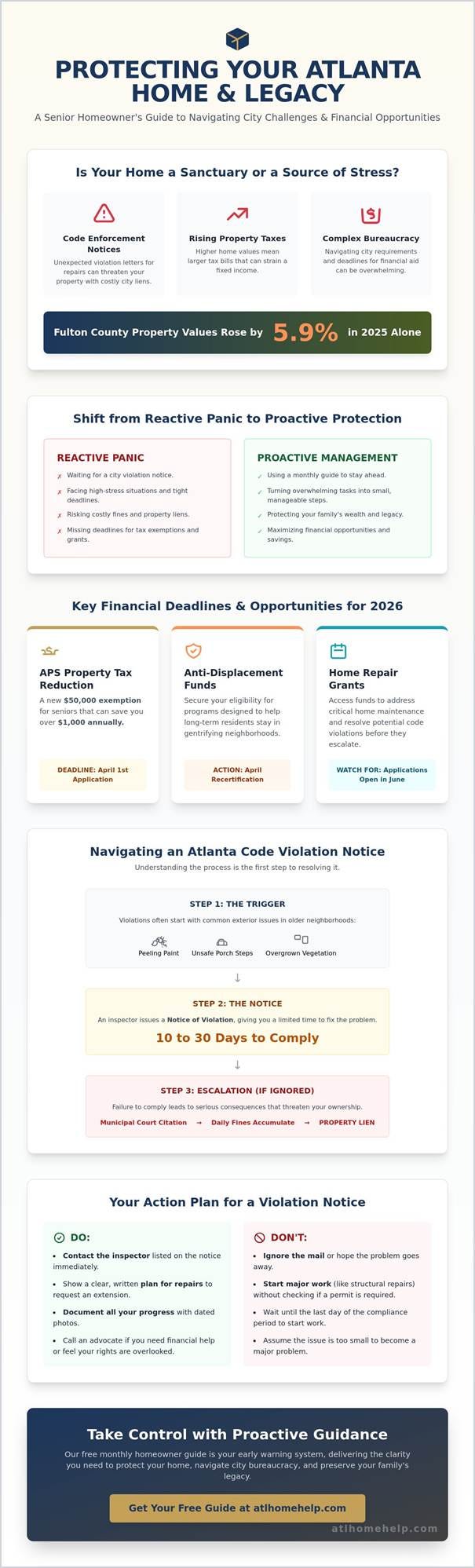
Receiving a notice from the City of Atlanta Code Enforcement can be incredibly stressful. It often arrives in intimidating official language and can make you feel like you’ve done something wrong. However, it’s important to understand that these notices are common, especially in neighborhoods with older homes. The key is to know how to respond calmly and effectively.
A code enforcement lien is a legal claim the city places on your property for unpaid fines related to code violations, giving the city a security interest in your home until the debt is settled. The best way to protect your property and your rights is to address the initial violation notice promptly and prevent it from ever reaching the lien stage.
Common triggers for code violations in older Atlanta neighborhoods: These often include overgrown grass or weeds, inoperable vehicles parked in the yard, peeling paint, broken fences, or improper trash and recycling storage.
The timeline from a notice to a fine: Typically, you are given a specific timeframe (e.g., 30 days) to correct the violation. If it isn’t addressed, fines begin to accrue, which can eventually lead to a lien.
How to stop an Atlanta code enforcement lien before it’s too late: The most effective method is proactive compliance. By addressing the violation outlined in the initial notice and communicating with the enforcement officer, you can resolve the issue long before a lien is considered.
Responding to a Code Violation Notice
If a notice appears at your door, do not panic. Your first step is to read it carefully to understand the specific violation and the deadline for compliance. The situation is almost always correctable. Here is a simple strategy to de-escalate the situation:
Document Everything: Take photos of the area in question as soon as you receive the notice. This creates a “before” picture.
Contact the Inspector: The notice will have the name and phone number of the code enforcement officer. A polite, professional call to clarify the issue and state your intention to fix it can go a long way. This shows you are taking the matter seriously.
Create a Plan: Determine what steps are needed to correct the violation. If you need help with repairs, now is the time to reach out to family, community groups, or trusted contractors.
Correct the Issue and Document Again: Once the repair is complete, take “after” photos. Follow up with the inspector to let them know the issue has been resolved and ask them to close the case.
One of the most common mistakes homeowners make is ignoring the notice, hoping it will go away. This almost always leads to increased fines and a more complicated legal situation. Prompt communication is your most powerful tool.
Understanding Property Liens and Your Rights
A lien on your property can have serious consequences. It can make it difficult to sell or refinance your home and, in a worst-case scenario, can complicate passing the property to your heirs. The lien remains attached to the property title until the debt is paid, meaning your beneficiaries would inherit the financial obligation along with the house.
This is why consistent maintenance is directly linked to your legal standing as a homeowner. By keeping your property in good repair, you not only preserve its value but also protect it from legal claims that could jeopardize your family’s legacy. If you are already facing a potential lien, it is crucial to seek guidance on how to resolve it. An advocate can help you understand your options and communicate with the city on your behalf. For more detailed information, see our guide to property lien help for Atlanta homeowners.
The Senior Homeowner’s Monthly Maintenance Checklist
For seniors, a home maintenance checklist should prioritize safety, accessibility, and city compliance over cosmetic upgrades. The goal is to create a safe living environment and prevent the kinds of issues that attract attention from code enforcement. This checklist is designed to be simple, manageable, and focused on what matters most for Atlanta’s climate and older housing stock.
Prioritizing tasks that impact safety and city compliance: Focus on clear pathways, secure railings, and functional smoke detectors first.
Seasonal Atlanta factors: Be mindful of summer humidity that can worsen wood rot, spring pollen that clogs gutters, and rapid summer foliage growth that can quickly violate city ordinances.
Simple checks that prevent expensive structural repairs: Regularly checking for signs of water intrusion around windows and in the basement can save you from thousands of dollars in mold remediation or foundation repair.
Budgeting for repairs on a fixed income: A monthly check-in helps you anticipate future expenses, allowing you to set aside small amounts of money over time for predictable repairs like a new water heater or roof maintenance.
Safety and Accessibility Audits
Your safety at home is paramount. Each month, take a few minutes to perform a simple audit of your living space. Check that all interior and exterior light bulbs are working, especially in stairwells and along walkways. Test handrails on stairs and porches to ensure they are sturdy. Walk through your home to identify and remove any potential trip hazards, like loose rugs or electrical cords.
It’s also essential to test your smoke and carbon monoxide detectors monthly. Finally, take a look at the sidewalks and any paths leading to your door. The City of Atlanta requires homeowners to maintain the sidewalks adjoining their property, so ensuring they are clear of debris and not lifted by tree roots can prevent both a city notice and a potential injury.
Exterior Maintenance to Avoid City Notices
The exterior of your home is what code enforcement officers see first. A well-maintained exterior signals a responsible homeowner and makes your property less likely to be flagged for inspection. Your monthly exterior check should include:
Managing overgrowth: Trim bushes and trees so they don’t obstruct sidewalks or street signs. Keep your lawn mowed to the required height and address any areas of excessive weeds.
Checking for visible debris: Scan your roof from the ground for any large accumulations of leaves or fallen branches, especially after a storm. Ensure gutters are clear and directing water away from your foundation.
Maintaining ‘curb appeal’: Address any peeling paint, broken shutters, or leaning fences. You don’t need a perfect home, but keeping up with basic repairs helps maintain the character of your neighborhood and keeps you in good standing with the city.
Planning for the Future: Senior Housing Transitions
For many seniors, the thought of leaving a long-time family home is emotional and difficult. The goal for most is to age in place, and with the right support and planning, that is often possible. However, it is also wise to understand the options available for when a transition becomes necessary for health, financial, or personal reasons.
Recognizing the signs that it may be time to consider a change—such as increasing difficulty with stairs, social isolation, or the mounting costs of maintenance—is the first step. From there, you can begin to evaluate the wide range of senior living options in Atlanta, from in-home care services that support aging-in-place to assisted living communities. The monthly homeowner guide helps prepare you for an eventual move by ensuring your current home is well-maintained, which maximizes its value and makes the transition smoother when the time comes. To explore your options, consider a senior housing referral in Atlanta.
The Role of Senior Housing Consultation
Making decisions about senior housing is one of the most significant choices a family can face. It’s an emotional process that often involves differing opinions and a great deal of stress. This is where an objective, compassionate advocate can be invaluable. A senior housing consultant works for you and your family, not for a specific real estate company or senior living facility.
Our role is to provide unbiased information, help you understand the pros and cons of each option, and facilitate calm, productive conversations. We help families address the most common objection—”I’m not ready to leave my home yet”—by focusing on education and planning, not pressure. A consultation is a chance to gather information long before a decision is needed, empowering you with knowledge and control over your future.
Protecting the Equity You’ve Built
Your home is likely your largest financial asset, and protecting the equity you’ve built over decades is essential for funding your future. Every repair you make today and every code violation you prevent is an investment in that equity. A well-maintained home will always be in a better position, whether you are using its equity to fund in-home care or selling it to finance a move to a senior community.
Furthermore, it’s crucial to take advantage of all available financial resources. For example, Fulton County offers significant property tax exemptions for seniors, but you must apply for them. Understanding and utilizing these programs can save you thousands of dollars annually, freeing up funds for maintenance or future planning. A comprehensive approach that includes both physical upkeep and financial diligence is the best way to protect your legacy and prepare for the next phase of life.
Get Started with Your Free Monthly Resource
Taking the first step toward proactive home management is simple. Our free monthly guide, delivered through our Substack publication, is designed to give you timely, relevant, and easy-to-understand information specifically for Atlanta homeowners. We cut through the bureaucratic jargon and provide practical checklists, deadline reminders, and expert advice to help you protect your home and your peace of mind.
What to expect in your first guide: Your first issue will include a seasonal maintenance checklist, a breakdown of a recent City of Atlanta ordinance change, and tips for preparing your annual property tax appeal.
How to subscribe: Simply sign up through our website, and the guide will be delivered directly to your email inbox each month.
Accessing specialized services: If you face a more complex challenge, your subscription also gives you direct access to schedule a compassionate senior housing advisory consultation.
Our commitment to the community: We are a faith-based resource dedicated to serving the Atlanta community with integrity and care.
Your Path to a Stress-Free Home
Imagine having a clear, simple plan for your home each month. Imagine knowing exactly what to look for, who to call, and what steps to take to stay ahead of problems. This guide provides that structure. It’s a tool you can use to communicate with your adult children, helping them understand your needs and how they can best support you. The peace of mind that comes from being informed and prepared is immeasurable. If you have specific challenges you’d like to discuss, you can always set up a consultation to get personalized advice.
Join the ATL Home Help Community
You are not alone in this journey. We are building a community of Atlanta homeowners who are committed to protecting their legacies and supporting one another. We invite you to join us for local workshops and community events where you can learn more and connect with your neighbors. We encourage you to share this resource with friends, neighbors, and members of your church community who may also benefit from this information. Take the first step today.
Download your Free Monthly Homeowner Guide today and start your journey toward a more secure and stress-free future in the home you love.
Frequently Asked Questions
How do I stop a City of Atlanta code enforcement lien from being filed?
The most effective way to stop a lien is to act on the initial violation notice. Contact the code enforcement officer listed on the notice, correct the specified issue by the deadline, and provide proof of compliance. Proactive communication and prompt action will almost always resolve the issue before fines accumulate and a lien is filed.
What are the most common code violations for seniors in Atlanta?
Common violations for seniors often relate to exterior maintenance that can become physically difficult to manage. These include overgrown lawns or vegetation, peeling paint, limbs overhanging a public sidewalk, inoperable vehicles, and improper storage of trash receptacles.
Are there free home repair resources for seniors in Fulton County?
Yes, several non-profit and government-sponsored programs offer free or low-cost home repairs for eligible low-income seniors in Fulton County. Organizations like Meals on Wheels Atlanta and Atlanta Habitat for Humanity often have repair programs focused on safety and accessibility. Our guide can help connect you with these resources.
How much does a senior housing consultation cost in Atlanta?
The cost can vary. Some advisory services charge an hourly rate, while others, like referral services, are often free to the family (they are compensated by the senior living communities). At ATL Home Help Solutions, we offer an initial consultation to understand your needs and explain any potential costs transparently before you commit to anything.
Can I get help responding to a property tax increase notice?
Yes. While we do not provide legal or financial advice, we can guide you through the process of filing a property tax appeal in Fulton County. Our monthly guide often includes deadline reminders and step-by-step instructions for navigating the appeal process, which you have the right to do every year.
What is the difference between a housing referral service and a realtor?
A realtor is a licensed professional who helps you buy or sell a property, typically for a commission. A senior housing referral service or advisor specializes in helping you understand different types of senior living options (like assisted living or in-home care) and connects you with appropriate, vetted providers based on your specific care needs, budget, and location preferences.
Does the monthly guide cover faith-based senior resources?
Absolutely. As a faith-based organization, we make it a priority to highlight and connect our readers with other compassionate, mission-driven resources throughout the Atlanta community, including those offered by churches and other faith-based non-profits.
How can I help my elderly parent manage their home remotely?
Our monthly guide is an excellent tool for adult children who live out of town. It provides a structured checklist that you can use during phone calls or visits to help your parent identify potential issues. It also keeps you informed about local Atlanta ordinances so you can help them stay in compliance and avoid unnecessary stress.