


Imagine walking into your parent’s home in Midtown and noticing a stack of unopened mail on the counter or a fresh dent in the drywall where they lost their balance. It is a heavy realization that hits many local Atlanta families when they first start looking for signs of decline. You aren’t alone in feeling overwhelmed by the weight of these observations, and it’s common to wonder if you’re reaching a breaking point.
It’s natural to feel a mix of guilt and exhaustion, especially when you’re managing your own life while worrying about a catastrophic fall or a sudden Atlanta code violation on their aging property. You want to protect their independence, but you also need to ensure their safety. This guide will help you move past the stress and look at the situation with clarity and objectivity.
You will learn how to assess their health and the physical state of their home to determine if a move is the right next step. We will walk through a clear checklist for evaluating daily activities and provide practical steps for a smooth transition. This information is designed to give you the confidence that you’re making the best decision for your loved one’s future without feeling like you have given up on them.
Key Takeaways
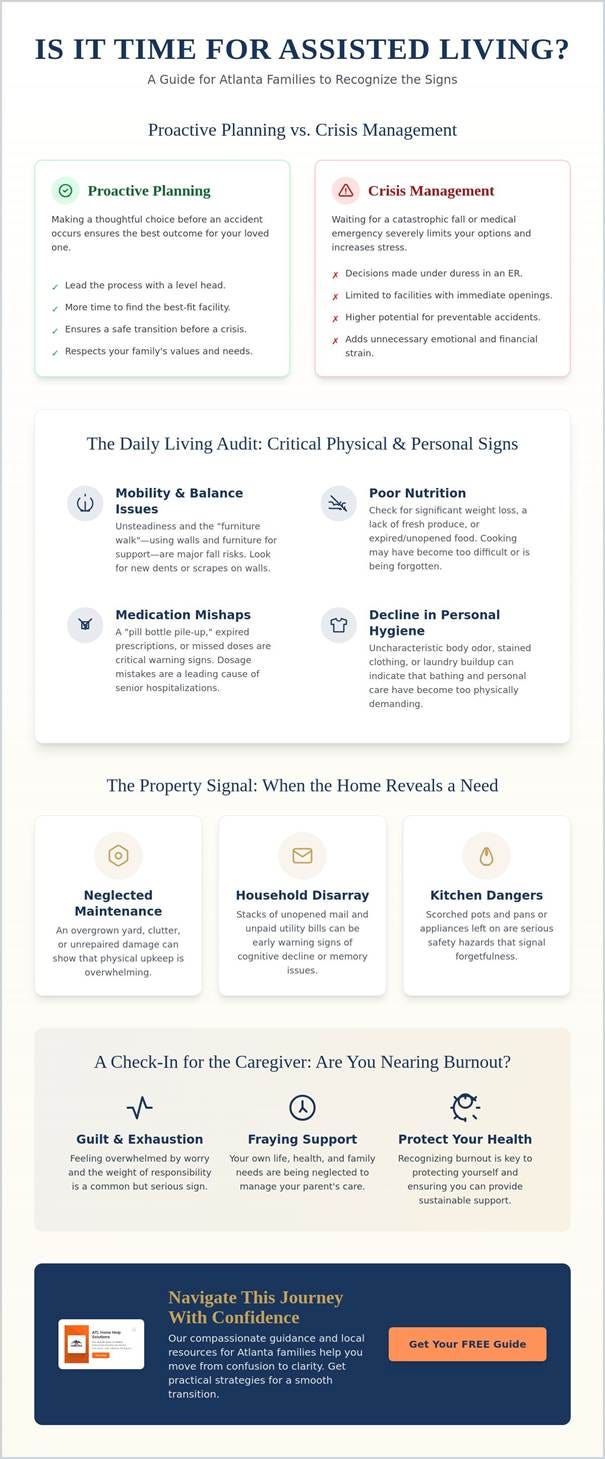
Learn to distinguish between proactive planning and crisis management to ensure your loved one transitions safely before a preventable accident occurs.
Identify the specific signs of decline through a step-by-step audit of physical health and daily nutrition habits.
Discover how neglected home maintenance, such as an overgrown yard or unpaid utility bills, serves as a critical early warning sign of cognitive decline.
Recognize the symptoms of caregiver burnout to protect your own health while balancing the needs of your family and aging parents.
Gain practical strategies for starting a respectful conversation about senior living options available throughout the Atlanta area.
Table of Contents
The Property Signal: How Home Maintenance Reveals Health Status
Next Steps: Finding the Right Atlanta Senior Living Solution
When Home is No Longer the Safest Haven: Defining the Need
Deciding to move a parent out of the house they’ve lived in for decades is one of the hardest choices an Atlanta family can make. In our community, we value the deep roots and the history tied to our local neighborhoods. However, identifying the signs of decline isn’t about taking away your parent’s freedom; it’s about making sure they have the support they need to actually enjoy their senior years. Many people ask, What is assisted living? At its core, it’s a residential option that provides personal care services and health support for those who need help with daily activities but don’t require the 24/7 medical attention of a nursing home.
Waiting for a “crisis point,” like a catastrophic fall or a kitchen fire, often limits your choices. When you’re forced to make a decision in an emergency room, you might end up in the only facility with an immediate opening rather than the one that best fits your family’s values. Proactive planning allows you to lead the process with a level head. We understand the desire to keep Mom or Dad at home, especially when faith and family traditions emphasize caring for our elders personally. A holistic home audit helps you look at the property and the person together, ensuring that “home” remains a place of peace rather than a source of hidden danger.
The Difference Between Normal Aging and Red Flags
It’s easy to dismiss a missed pill or a messy kitchen as just part of getting older. But there’s a clear difference between minor forgetfulness and cognitive decline that threatens safety. You might notice your parent is “isolating in place” in their Atlanta home, staying in one room because the stairs are too difficult or they’re afraid of falling in the yard. The threshold of safety for a senior living alone is reached when their physical environment requires more maintenance or mobility than their current health can safely provide.
Why Atlanta Families Often Delay the Decision
Many families in areas from Buckhead to Southwest Atlanta feel anchored by the history of the family home. The thought of sorting through decades of memories while facing the complexity of local senior housing costs can feel paralyzing. ATL Home Help Solutions works to de-escalate this anxiety by offering compassionate guidance that helps you see the path forward clearly. We provide the resources you need to move from a place of confusion to a place of informed potential, allowing you to focus on your relationship with your parent rather than the stress of the property transition.
How to Conduct a Daily Living Audit: 5 Physical Signs
Identifying the signs of phycial decline requires more than just a quick chat over coffee. It involves a methodical observation of how your loved one navigates their day. When you visit, look for subtle changes in their “Activities of Daily Living,” or ADLs. These are the basic tasks we often take for granted, such as dressing, bathing, and eating. If these tasks are becoming a source of frustration or are being skipped entirely, it’s a clear signal that the current living situation is no longer sustainable.
Nutrition is often the first area to slip. A parent might say, “I already ate,” to avoid the effort of cooking. Look for unopened cans, a lack of fresh produce, or significant weight loss. Medication management is equally critical. Check for a “pill bottle pile-up,” which includes expired prescriptions or multiple bottles of the same medication. Mistakes in dosage are a leading cause of hospitalizations for seniors living alone. If you’re feeling overwhelmed by these observations, our Free Monthly Homeowner Guide offers additional local resources to help you stay organized during this assessment.
Physical mobility and balance are the final pieces of the audit. Watch for the “furniture walk,” where a senior relies on grabbing the backs of chairs or edges of tables to move through a room. This behavior indicates a high risk for falls. You should also check for uncharacteristic body odor or stained clothing, as these are cues that personal hygiene has become too physically demanding to maintain without help.
The ‘Kitchen and Bathroom’ Inspection
The state of the kitchen and bathroom provides an objective look at safety. In the kitchen, look for scorched pans or tea kettles, which suggest a stove was left on and forgotten. In the bathroom, check for laundry buildup or a lack of clean towels. Look closely for “near-miss” signs in wet areas, such as a loose bath mat or a lack of sturdy grab bars. These small details often reveal a history of stumbles that your parent might be too proud to mention.
Cognitive Cues: Beyond Simple Forgetfulness
Cognitive health is just as important as physical safety. Pay attention to “looping,” which is the repetition of the same story or question within a single conversation. You may also notice confusion regarding the time of day or the purpose of common household items. Documenting these specific instances is vital for understanding long-term care options and sharing accurate information with an Atlanta senior housing advisor. Clear documentation replaces emotional guesswork with facts, helping you make a decision rooted in your loved one’s actual needs.
The Property Signal: How Home Maintenance Reveals Health Status
While physical health is often the primary focus, the state of a senior’s property usually tells the most honest story about their daily reality. In Atlanta, where humidity and rapid plant growth require constant vigilance, a neglected exterior is often one of the first signs of decline. When a senior who once took pride in their rose bushes or a pristine lawn begins to let the yard become an overgrown thicket, it isn’t just a change in hobby. It is often a sign of physical exhaustion or cognitive overwhelm. A leaking roof or a porch in disrepair suggests that the mental load of homeownership has become too heavy to carry alone.
Clutter and hoarding are also significant red flags that go beyond simple untidiness. Excessive piles of newspapers, boxes, or household items create serious trip hazards and fire risks. These physical barriers often reflect a decline in executive function, where the senior can no longer decide what to keep or how to organize their environment. When the home environment becomes a maze, the risk of a fall increases exponentially, turning a place of comfort into a dangerous setting.
Identifying Atlanta Code Violations and Liens
The City of Atlanta is proactive about property standards, and a yellow notice on the door can be an objective wake-up call for families. Common violations include overgrown lots, exterior maintenance issues, or improper debris storage. These aren’t just aesthetic problems; they trigger city fines that can quickly escalate into thousands of dollars. If left unaddressed, these code enforcement liens can attach to the property, complicating any future sale or transition to senior care. If you’ve discovered your parent is facing these pressures, you can learn how to stop Atlanta code enforcement lien to protect the home’s equity while you plan the next steps.
The Financial Footprint of Decline
A senior’s mailbox often holds the most critical clues about their cognitive state. Look for stacks of unopened mail, especially official envelopes from the City of Atlanta or the Fulton or DeKalb County tax offices. Unpaid utility bills or property taxes are clear indicators that the complex financial management of a home is slipping. This vulnerability often attracts predatory offers from buyers who target seniors with distressed properties, hoping to buy the home for far less than its actual value. Resolving these property and financial issues is a prerequisite for a smooth transition, as the equity in the home is often a key component of finding and paying for long-term care. By addressing the property signal early, you protect your parent’s financial legacy and their future quality of life.
Assessing the Caregiver: Is Your Support System Fraying?
When families search for signs of decline, they usually focus entirely on their aging parent. However, the most telling sign often lies with the person providing the care. If you’re the primary caregiver, your physical and emotional well-being is a direct indicator of whether the current situation is sustainable. Caregiver burnout is a serious condition that manifests as chronic exhaustion, irritability, and even new health problems of your own. If you find yourself snapping at your loved one or feeling a sense of dread when your phone rings, it’s a signal that the support system is fraying.
Many Atlanta residents belong to the “Sandwich Generation,” balancing the demands of a career and raising children with the increasing needs of an elderly parent. In a city where a simple cross-town commute can take an hour, the logistics of managing two households often lead to a breaking point. When the level of care required, such as managing complex medications or assisting with mobility, exceeds what you can safely provide, the risk of injury increases for both you and your parent. Professional facilities in Georgia are required to maintain specific staffing ratios, such as one caregiver per 15 residents during the day, ensuring that help is always available. Trying to meet these needs alone is not just difficult; it can become dangerous.
If you’re feeling the weight of these responsibilities, it’s time to seek a sustainable resolution. You can download our Free Monthly Homeowner Guide to access local resources and checklists that help you evaluate your capacity as a caregiver with clarity.
The Guilt Factor: Reframing the Conversation
Guilt is often the biggest barrier to making a decision. You might feel like you’re “giving up” or abandoning your parent, especially if your faith or family traditions emphasize personal care for elders. It’s helpful to reframe the transition as providing them with access to professional, 24-hour support that you simply cannot replicate. Using a neutral third party, such as a senior housing consultant or a trusted community leader, can help mediate family disagreements and keep the focus on safety. This shift allows you to move from being a stressed-out nurse and property manager back to being a supportive son or daughter.
Calculating the True Cost of Caregiving
The financial impact of caregiving goes far beyond the price of home health services, which in Atlanta typically range from $21 to $26 per hour. There are hidden costs, such as missing work to handle emergency repairs or the physical toll of sleep deprivation. More importantly, there is an emotional cost. When every interaction with your parent involves a chore or a medical task, the relationship often becomes strained and transactional. Professional care often improves the parent-child bond by removing the friction of daily caregiving and allowing your time together to be focused on connection and legacy.
Next Steps: Finding the Right Atlanta Senior Living Solution
Once you have identified the signs of decline, the focus shifts to finding a community that feels like home. This transition is rarely easy, but it is more manageable when you have a clear plan. Starting the conversation with a resistant parent requires patience and a “listening-first” approach. Instead of listing their failures at home, ask about their frustrations with maintenance or their desire for more social connection. Framing the move as a proactive choice for safety rather than a loss of freedom helps preserve their dignity.
Researching senior living in Atlanta means looking at the specific character of our neighborhoods. Options in Buckhead might offer high-end amenities, while communities in Southwest Atlanta often emphasize deep-rooted neighborhood ties and accessibility. When you tour these facilities, visit at different times of day. A morning visit shows you the energy of the activities, but a late evening visit reveals the true staffing levels and the quietness of the environment. A local advisor who understands the signs of decline can simplify this search by providing “boots on the ground” knowledge that national call centers simply don’t have.
The ATL Home Help Solutions Approach
We believe in a faith-based commitment to the seniors and families of our community. Our goal is to serve as a knowledgeable advocate during a time of high stress. We offer a senior housing consultation Atlanta that focuses on practical, de-escalating solutions for both the person and the property. By providing our monthly homeowner guide Atlanta, we empower you with the information needed for long-term planning. This ensures you never feel forced into a rushed decision by a sudden crisis.
Creating a Transition Timeline
A successful move requires a steady, methodical timeline. Before the move-in date, prioritize resolving any property issues discussed earlier, such as city liens or necessary repairs. This ensures the home is ready for a potential sale or rental to fund future care. Simultaneously, begin gathering medical records and financial documentation required for community applications. Finalizing the decision with compassion means acknowledging the grief of leaving a long-time home while pointing toward the safety and community that lies ahead. We are here to help you move from a place of confusion to a place of informed potential.
Moving Toward Safety and Peace of Mind
Deciding to transition a loved one into a new living environment is a journey rooted in love and the desire for their safety. By looking objectively at the physical state of their property and the health of the primary caregiver, you gain the clarity needed to make a confident choice. Recognizing the signs of decline allows you to act before a crisis occurs, ensuring your parent maintains their dignity in a supportive setting. You aren’t giving up on your family; you’re providing them with the professional resources they deserve.
As a faith-based community resource, we are here to provide Atlanta-specific property and housing expertise to help you navigate these complex systems. Our goal is to offer compassionate, de-escalating guidance that empowers your family to move forward with stability. To stay informed and prepared for the road ahead, please Get your Free Monthly Homeowner Guide for Atlanta Seniors. You don’t have to carry this weight alone, and with the right information, you can find a resolution that brings peace to your entire family.
Frequently Asked Questions
What is the best age to move a senior to assisted living in Atlanta?
There is no single “best age” for this transition, as the decision depends entirely on health and safety needs rather than a specific number. In Atlanta, where seniors 65 and older make up about 12.3% of the population, many families make the move in the late 70s or early 80s. However, the signs it’s time for assisted living Atlanta often appear after a change in mobility or a medical diagnosis, making health status the true deciding factor.
How do I know if my parent is just forgetful or has dementia?
Normal forgetfulness is usually minor, like misplacing keys, whereas dementia involves cognitive decline that affects safety and daily functioning. Look for symptoms like becoming lost in familiar Atlanta neighborhoods or forgetting the purpose of common household items. If memory loss leads to scorched pans or missed medications, it has crossed into a safety concern. Professional medical evaluations are the only way to get a definitive diagnosis and determine the required level of care.
Can assisted living help if my parent has an Atlanta property lien?
Assisted living facilities do not resolve property liens, but identifying these liens is a critical step in the transition process. Unpaid city fines or code violations can prevent you from selling the home to fund care. We help families navigate these property challenges by providing guidance on resolving liens before the move. Clearing the title ensures the home’s equity is available to cover the monthly costs of a local senior community.
What should I do if my parent refuses to move to assisted living?
Focus on safety and your own capacity to provide care rather than “taking away” their independence. Start with a trial stay at a local facility or invite a neutral third party, like a senior housing advisor, to lead the discussion. Reframing the move as a way to stay social and safe in the community often works better than arguing. If safety is at immediate risk, consult with a professional to discuss legal options like guardianship or power of attorney.
Are there faith-based senior resources in Atlanta to help with this choice?
Yes, Atlanta has a strong network of faith-based senior resources and communities that align with various spiritual values. Many local churches and synagogues offer outreach programs or have partnerships with specific senior living facilities. These resources provide emotional and spiritual support to families making this difficult choice. We can help connect you with community leaders who prioritize compassionate care and civic-minded advocacy for our city’s elders, ensuring the transition feels supported by your community.
How much help with ‘activities of daily living’ does assisted living actually provide?
Assisted living provides daily support with tasks like bathing, dressing, grooming, and medication management. Georgia law requires facilities to maintain specific staffing ratios, typically one caregiver per 15 residents during the day, to ensure help is always available. Residents also receive three meals a day and housekeeping services. This level of support is designed for those who need a helping hand but don’t require the 24/7 clinical medical supervision found in a skilled nursing home.
How do I find affordable senior housing options in the Atlanta area?
To find affordable options, look into facilities that accept Georgia Medicaid or offer tiered pricing based on care levels. While the average cost for assisted living in Atlanta is between $4,200 and $5,000 per month, some communities outside the immediate city center may be more budget-friendly. Veterans benefits and long-term care insurance can also help bridge the gap. Our monthly guide provides local insights on navigating these financial hurdles without compromising on the quality of care provided.
Is there a checklist for evaluating an Atlanta assisted living facility?
An effective checklist should include evaluating the staff-to-resident ratio, the cleanliness of the dining area, and the variety of social activities. Ask about the specific medical alert systems used, as new Georgia rules effective in May 2025 allow for more flexible staffing in buildings with approved systems. Observe the interactions between staff and residents during your tour. A facility that feels like a community rather than a clinical institution is often the best fit for long-term happiness.